
What Is SEO? (The Traditional Search Approach)
Search Engine Optimisation is the discipline of making your content discoverable and rankable on traditional search engines like Google, Bing, and Yahoo. The fundamental mechanism hasn’t changed much since the early 2000s: search engines crawl your website, index your content, and rank it based on hundreds of signals that indicate relevance and authority.
The core ranking factors remain remarkably consistent. Google evaluates your content based on keyword relevance, backlink profile, technical site health, page speed, mobile-friendliness, and user experience signals like bounce rate and dwell time. You optimise for these factors by creating keyword-targeted content, earning links from authoritative sites, fixing technical issues, and ensuring your site delivers what users actually want.
The goal is straightforward: get your pages to appear as high as possible in search engine results pages (SERPs). Rank in position one for a valuable keyword, and you capture roughly 28-40% of clicks for that query. Drop to position five, and you’re fighting for scraps. The entire game revolves around visibility in those ten blue links.
But the landscape is fundamentally shifting. According to Search Engine Land, whilst 95% of Americans still use traditional search engines monthly, AI tool adoption has jumped from 8% in 2023 to 38% in 2025. More critically, 21% of U.S. users now access AI tools like ChatGPT and Perplexity 10+ times per month.
The limitation isn’t that SEO has stopped working. It’s that an increasing volume of searches never result in a click to your website. Users get their answers directly from AI assistants, leaving your beautifully optimised content entirely invisible, regardless of where it ranks.
What Is GEO? (Generative Engine Optimisation Explained)
Generative Engine Optimisation emerged as a response to a fundamental shift in how people find information. When someone asks ChatGPT, Perplexity, Claude, or Google’s AI Overviews a question, they’re not getting a list of links to click. They’re getting a synthesised answer generated in real-time, sometimes with citations, sometimes without.
AI search engines work completely differently from traditional crawling and indexing. These systems are built on large language models (LLMs) trained on vast datasets that include web content, books, academic papers, and other text sources. When you query an AI assistant, it doesn’t search the web in real-time—it generates an answer based on patterns learned during training, potentially augmented with real-time retrieval from authoritative sources.
The mechanics of GEO centre around being included in training data, being cited during retrieval-augmented generation, and being formatted in ways that LLMs recognise as authoritative. This means your content needs clear structure, factual accuracy, citation-worthy statistics, expert authorship signals, and answers formatted in ways that AI systems can easily extract and repackage.
Key optimisation factors include authority markers like author credentials and institutional backing, structured data that makes facts easily extractable, citation-worthiness through original research or exclusive expert insights, and conversational relevance that matches how people actually phrase questions to AI assistants. The content that gets featured isn’t necessarily the most keyword-optimised—it’s the most useful for answering direct questions with verifiable information.
The goal differs fundamentally from SEO. You’re not trying to rank in position one. You’re trying to be the source that AI assistants cite, quote, or reference when generating answers. Being mentioned in a ChatGPT response or cited in a Perplexity answer becomes the new equivalent of a first-page ranking.

SEO vs GEO: Key Differences Breakdown
The user journey tells you everything you need to know about why these approaches differ so dramatically. In traditional SEO, someone searches Google, sees your result, clicks through to your website, and consumes your content on your domain. You get the visit, the session data, the opportunity to convert them. With GEO, someone asks ChatGPT a question and receives a complete answer without ever knowing your brand exists, even if your content informed that answer.
Content format preferences diverge sharply between the two channels. Traditional SEO favours comprehensive articles built around target keywords, optimised for featured snippets, and designed to keep users on your page. GEO favours content that’s easily extractable—clear definitions, cited statistics, expert quotes, and factual statements that AI can confidently reference. A 3,000-word SEO article might perform brilliantly in Google but be too dense for AI systems to extract clean answers from.
Ranking signals operate on entirely different principles. SEO relies heavily on backlinks as votes of authority—the more high-quality sites link to you, the more Google trusts your content. GEO cares more about citation-worthiness and authority markers. Having an MD credential matters more than having 50 backlinks when an AI is deciding whose medical advice to include. Original research and proprietary data become more valuable than keyword density.
Measurement metrics shift dramatically. With SEO, you track organic traffic, keyword rankings, click-through rates, and conversion from search visitors. With GEO, you’re monitoring citations in AI responses, brand mentions in generated answers, and how often your content appears in AI source lists. According to Statcounter, ChatGPT commands 79.79% of AI chatbot market share globally as of December 2025, with Perplexity at 10.85% and Google Gemini at 4.68%—these are the platforms where your GEO performance matters.
Timeline and results expectations differ substantially as well. SEO typically takes 3-6 months to show meaningful ranking improvements, especially in competitive spaces. GEO can show faster results because you’re not competing for finite ranking positions—multiple sources can be cited in a single AI response. But measuring that impact requires entirely new tracking methodologies that most marketing teams haven’t implemented yet.
Why You Need Both SEO and GEO in 2025
The statistical reality makes the case clearer than any opinion could. According to Wix’s AI Search Lab, combined traffic to major AI search platforms reached 7.5 billion visits in August 2025, growing 150% year-over-year from 3.5 billion visits in August 2024. Over the past 12 months, AI search has seen average year-over-year traffic increases of 416% and average monthly growth of 8%.
Search isn’t disappearing—it’s fragmenting across multiple interfaces and interaction models. Your potential customers aren’t all using the same tool to find information anymore. Some still Google everything. Others start with ChatGPT. Many use both depending on the task. Focusing exclusively on SEO means you’re invisible to that rapidly growing AI-native segment. Focusing only on GEO means you’re abandoning the still-massive traditional search audience.
The risk of visibility gaps becomes acute when you consider search intent distribution. Transactional searches (“buy CRM software”) still happen predominantly on Google because people want to see options and compare. Informational searches (“how does CRM software work”) increasingly happen on AI assistants because people want direct answers. If you’ve only optimised for one type, you’re missing entire categories of potential customers.
The complementary benefits create a compounding effect. SEO drives direct traffic to your site where you control the conversion experience. GEO builds authority and brand recognition even when users don’t visit your site, positioning you as a trusted source that gets cited alongside industry leaders. When someone later searches for you by name (navigational search), that’s often because they first encountered your brand through an AI citation.
Future-proofing requires acknowledging that we don’t know exactly how search will evolve over the next 3-5 years. Google might integrate AI so deeply that traditional blue links become secondary. ChatGPT might add more web browsing and live search capabilities. New platforms we haven’t imagined yet might emerge. Diversifying your optimisation strategy across both SEO and GEO reduces your dependence on any single channel’s continued dominance.
How to Optimise for Both SEO and GEO Simultaneously
Optimising for both isn’t as complicated as running two separate strategies. Start with content that answers specific questions comprehensively. This satisfies Google’s preference for thorough, authoritative content whilst also giving AI systems clear, extractable answers. The key is structure—use clear headings (H2, H3) that frame questions, then answer them directly in the first paragraph of each section before expanding with details.
Technical optimisation creates a foundation that serves both channels. Schema markup tells Google what your content means, but it also helps AI systems understand context and relationships. Structured data for articles, FAQs, how-tos, and product information makes your content machine-readable in ways that benefit both traditional crawlers and LLM retrieval systems. Semantic HTML with proper heading hierarchy, lists, and tables helps both Google and GPT-4 understand your content structure.
Building authority signals that work for both requires focusing on expertise, not just links. Yes, backlinks still matter enormously for SEO. But author credentials, original research, proprietary data, and expert quotes matter for both channels. When you publish original survey data, you create link-worthy content for SEO whilst simultaneously creating citation-worthy content for GEO. The investment pays double dividends.
Creating a unified content workflow means training your team to think about both channels from the start. When someone creates an article, they should be asking: “Does this rank for our target keyword?” (SEO) and “Would ChatGPT cite this as a source?” (GEO). The content brief should include both keyword targets and answer density requirements. The quality checklist should verify both technical SEO elements and citation-worthy elements like statistics, expert credentials, and clear factual statements.
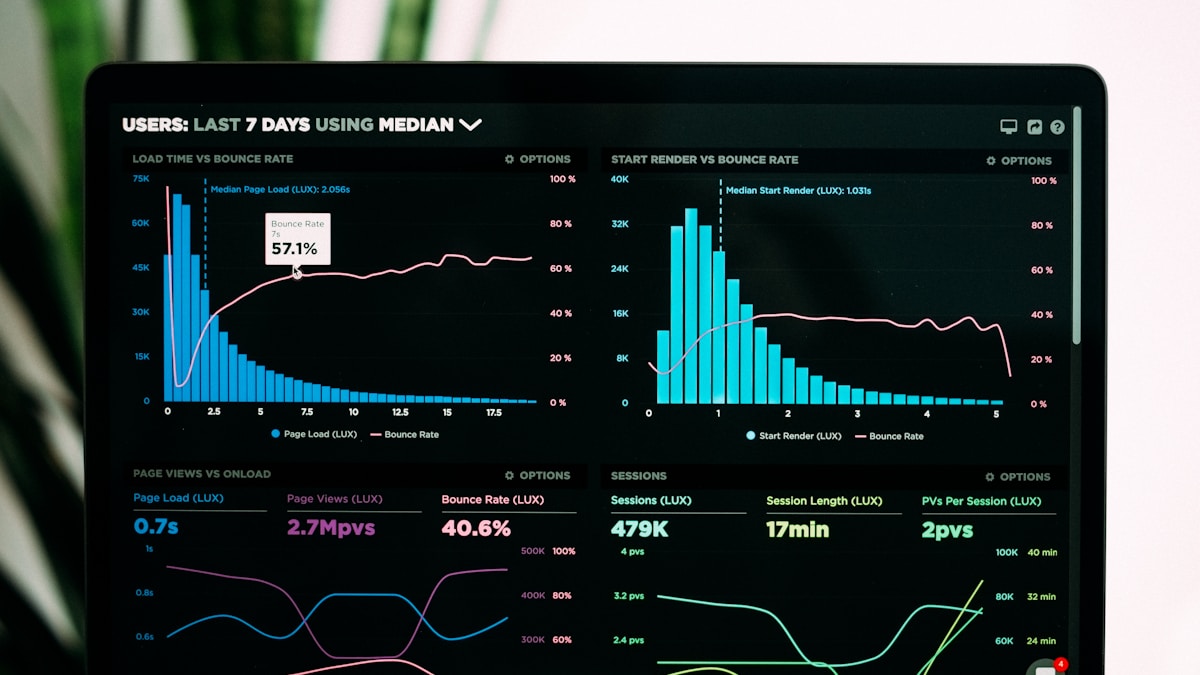
Monitoring performance across both channels requires different tools and approaches. Traditional SEO platforms like Ahrefs and SEMrush track rankings and backlinks brilliantly but don’t yet measure AI citations. You’ll need to manually query AI assistants with your target questions to see which sources get cited, then supplement this with emerging GEO-specific tools as they mature. Track both traditional organic traffic metrics and AI visibility metrics to understand your complete search presence.
Getting Started with GEO: Practical First Steps
Audit your existing content with a GEO lens before creating anything new. Look at your top-performing SEO articles and ask: Are the answers to key questions immediately clear? Do we cite specific statistics and sources? Are there clear author credentials displayed? Is the content formatted in extractable chunks rather than dense paragraphs? Most content optimised purely for SEO fails these GEO readiness tests.
Identify high-value topics where AI assistants are already providing answers. Search ChatGPT, Perplexity, and Google’s AI Overviews for the questions your audience asks. Note which sources get cited. This competitive GEO analysis reveals gaps where you could become the cited authority. If competitors are being referenced and you’re not, that’s your opportunity to create more citation-worthy content on those topics.
Implement citation-worthy elements systematically across your content. Add original statistics from your own data or customer research. Include expert quotes from credible team members with relevant credentials. Structure answers clearly with the key point stated upfront. Create comparison tables and data visualisations that AI systems can reference. These elements serve SEO (they make content more comprehensive) whilst dramatically improving GEO performance.
Use specialised tools to accelerate your GEO optimisation. Platforms like AI GTM Studio’s GEO Engine provide automated optimisation recommendations specifically designed to make your content citation-worthy for AI assistants, analysing factors like answer density, authority markers, and structured data implementation. These tools help you identify exactly what’s missing from a GEO perspective rather than guessing at what might work.
Measure GEO performance by manually tracking AI citations initially. Create a spreadsheet listing your key topics, then regularly query major AI assistants with relevant questions. Document when your brand gets cited, which competitors appear, and what specific content gets referenced. This manual process is tedious but gives you baseline data. As dedicated GEO tracking tools mature, you’ll be able to automate this monitoring, but understanding the manual process helps you know what matters.
The Future of Search: What Comes After SEO and GEO
Multimodal AI search is already here, even if adoption remains early-stage. ChatGPT now handles image uploads and analysis. Google Lens lets you search with photos. Voice assistants answer questions verbally without showing any text results. The next evolution of optimisation will need to account for searches that don’t involve typing keywords into a text box. Your content strategy might need to extend to image descriptions, video transcripts, and audio-friendly answer formats.
The convergence of search and conversational AI blurs traditional boundaries. Is someone “searching” when they ask ChatGPT a question in the middle of a longer conversation? The context from previous messages influences what answer they receive. Traditional SEO assumes each query is independent. Future optimisation needs to consider conversational context, follow-up questions, and multi-turn interactions where the AI assistant remembers what was discussed earlier.
Preparing for zero-click search means accepting that visibility increasingly happens without visits. Featured snippets in Google already provide answers without clicks. AI assistants take this further by synthesising information from multiple sources without linking to any of them. The business model shifts from “get them to our site” to “build authority wherever they encounter information.” Brand recognition becomes more valuable than click-through rates.
Building brand authority that transcends individual channels becomes the ultimate strategy. Whether someone finds you through Google, ChatGPT, LinkedIn, or any future platform, they should encounter consistent expertise and distinctive perspective. This means investing in thought leadership, original research, unique frameworks, and expert commentary that can’t be easily replicated. When you’re known as the authority on a topic, you get cited regardless of algorithmic changes.
Adaptive content strategies matter more than perfect optimisation for any single channel. The businesses that thrive will be those that experiment quickly, measure what actually drives results, and adjust faster than competitors. SEO vs GEO provides the framework for 2025, but search will continue evolving. Your content operations need the flexibility to optimise for channels that don’t exist yet, based on principles that remain constant: provide useful, authoritative, clearly structured information that helps people make better decisions.
Ready to Future-Proof Your Search Strategy?
The businesses winning in 2025 aren’t choosing between SEO and GEO—they’re systematically optimising for both whilst building content operations flexible enough to adapt as search continues evolving. But making that transition requires expertise in both traditional search mechanics and emerging AI retrieval patterns.
Explore AI GTM Studio’s GEO Engine to see how automated optimisation recommendations can help you build content that drives visibility across traditional search engines and AI assistants, positioning your brand as the cited authority in your category.
Leave a Reply