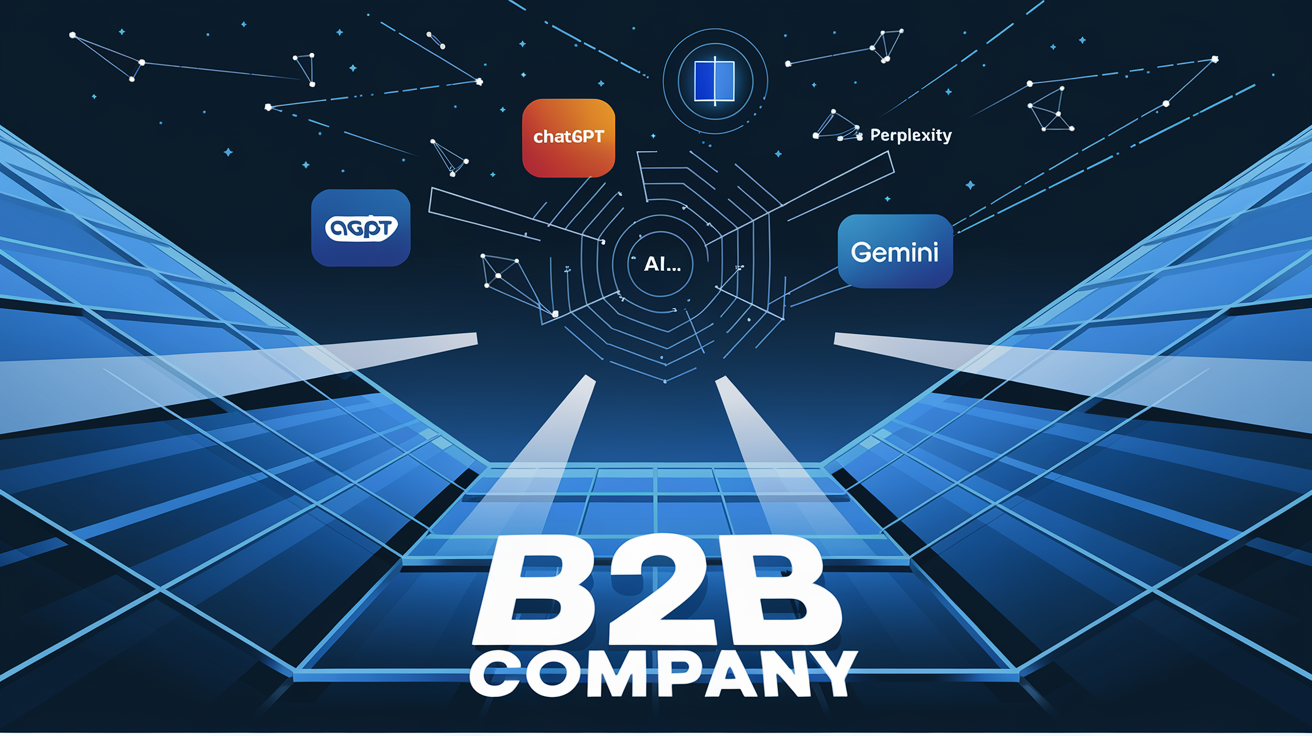
Your B2B Company Has Mastered Google SEO, But AI Search Engines Are Citing Your Competitors Instead
You’ve spent years perfecting your Google rankings. Your content hits the first page, your domain authority climbs steadily, and your backlink profile looks impressive. Yet when potential buyers ask ChatGPT or Perplexity to recommend solutions in your category, your brand doesn’t appear. Your competitor—who ranks below you on Google—gets cited instead.
This represents a fundamental shift in how B2B buyers discover vendors. According to Forrester, 89% of B2B buyers have adopted generative AI in less than two years, making it one of the top sources of self-guided information in every phase of their buying process. AI search optimization B2B strategies now determine which companies enter the consideration set before human sales conversations even begin.
When Gen Z software buyers enter the market, the numbers become starker: 15% report using AI “a lot”—nearly double the rate of millennials, Gen Xers, and baby boomers. If vendors aren’t surfacing in genAI answers, they risk disappearing entirely from buyers’ research process. You’re not losing clicks—you’re being excluded from purchase decisions before prospects even know you exist.
Why Traditional SEO Won’t Get You Cited in AI Search Optimization B2B Strategies
Google’s algorithm rewards you for matching keywords, earning backlinks, and optimising for user experience signals like page speed and dwell time. You climb the rankings by playing the game better than competitors. AI search engines don’t work this way.
When an LLM generates an answer, it’s not ranking pages—it’s synthesising information from sources it deems authoritative and relevant to the specific query. Your perfectly optimised blog post might rank first on Google but never get cited by ChatGPT if the content isn’t structured in a way the model can easily extract and attribute.
The measurement systems differ entirely. Traditional SEO tracks rankings amongst thousands of competing links. Generative Engine Optimization (GEO) measures whether you become one of only 5-7 sources AI models cite in their generated responses. The competition narrows dramatically, but the reward—appearing as a trusted source inside the answer itself—creates more influence than a position 3 ranking ever could.
Traditional SEO prioritises backlinks as trust signals. AI models prioritise brand mentions and entity recognition across authoritative sources. Your hundreds of low-quality directory links mean nothing to an LLM. What matters is whether reputable industry sites mention your company in relevant contexts, whether your brand appears consistently in high-quality content, and whether your expertise gets referenced when specific topics arise.
I’ve watched companies with inferior products steal contracts because they appeared in AI-generated comparison lists whilst better solutions remained invisible. The cost isn’t theoretical. It’s deals you never knew you were competing for, because the buyer never discovered you during their AI-assisted research phase.
How AI Search Engines Evaluate B2B Companies Differently
Large language models process information fundamentally differently than search engines. During training, they ingest vast amounts of text and learn patterns, relationships, and context about entities—including your company. During retrieval (like when using RAG systems), they access external knowledge bases to supplement their training data. Your goal is to appear prominently in both contexts.
Entity recognition drives source credibility in ways backlinks never could. When an LLM encounters “Salesforce” mentioned across thousands of authoritative sources in specific contexts—CRM, enterprise software, customer data platforms—it builds strong associations. Smaller B2B companies need to establish similar entity recognition within their niche. This requires consistent terminology, clear positioning, and presence on high-authority industry publications where AI models learn category structures.
Structured data signals help AI models parse your content efficiently. Schema markup that identifies your company, services, leadership team, and customer testimonials creates machine-readable context. JSON-LD structured data for Organization, Product, and Review schemas tells AI models exactly what you offer and how customers perceive it. This isn’t about gaming the system—it’s about making your expertise accessible to models that process information through entity relationships rather than keyword matching.
Recency matters more in AI citations than traditional search. Google might keep a comprehensive guide from 2020 ranking highly if it has strong backlinks and remains relevant. AI models, particularly those with access to current data, prioritise recent information when generating answers. If your content hasn’t been updated since 2022, you’re signalling that your expertise might be outdated, regardless of how well-researched the original piece was.
Building an AI-Discoverable Knowledge Foundation
Most B2B content strategies create isolated blog posts optimised for specific keywords. This worked for Google. For AI search optimization B2B approaches, you need comprehensive resource hubs that answer complete buyer questions within authoritative, well-structured content.
Think about how prospects actually research. They don’t just want to know “what is account-based marketing”—they want to understand implementation frameworks, tool comparisons, team structure requirements, budget considerations, and success metrics. A superficial 800-word blog post won’t get cited. A 5,000-word definitive guide with clear sections, data tables, and practical examples becomes a reference source AI models return to repeatedly.
Entity-first content architecture creates citation opportunities traditional keyword targeting misses. Instead of writing “10 marketing automation tips,” create a comprehensive resource on marketing automation that defines the category, explains core concepts, compares approaches, addresses implementation challenges, and provides decision frameworks. AI models favour content organised around entities and their attributes rather than keyword-stuffed listicles.
Structure each section for direct extraction. Start with a clear, quotable answer to the question your heading poses, then expand with supporting detail. AI models look for unambiguous statements they can extract and attribute with confidence. Bury your insights in dense paragraphs or hedge every claim with qualifiers, and they’ll get skipped for clearer sources.
Comparison pages have become citation magnets for purchase-stage queries. When prospects ask “What are alternatives to [competitor]?” or “Compare [solution A] vs [solution B],” AI models pull from pages that directly address these queries with structured information. Create honest, balanced comparisons that acknowledge trade-offs. AI models favour content demonstrating nuance over promotional material that reads like thinly disguised sales copy.

Optimising Content for AI Training Data and Retrieval Systems
AI models favour citation-friendly formats that make attribution straightforward. This means clear source references for every claim, specific statistics with links to original research, and verifiable statements the model can confidently reference. Vague assertions like “many companies struggle with vendor selection” don’t get cited. Precise statements like “According to Forrester’s 2024 research, 89% of B2B buyers have adopted generative AI for vendor research” do.
I’ve analysed hundreds of AI-cited sources across B2B categories. The patterns are consistent: cited content uses precise terminology throughout, defines concepts before deploying them, and structures complex ideas with clear hierarchies. Technical content performs particularly well when it follows consistent frameworks and avoids jargon without explanation.
Modular content architecture improves extraction rates significantly. Break comprehensive topics into reusable blocks: problem statements, framework overviews, implementation steps, proof points, and decision criteria. Each module should work as a standalone answer whilst connecting to the broader topic. This structure mirrors how AI models assemble responses—pulling relevant modules from across sources to construct coherent answers.
Create quotable executive insights backed by proprietary research. When your CEO or subject matter experts provide unique perspectives supported by your company’s original data, you create content that can’t be found elsewhere. AI models prioritise unique insights over rehashed generic advice. A single well-constructed thought leadership piece with original research can generate citations for years as the definitive source on that specific topic.
Formatting matters more than most content teams realise. Lists, tables, and data visualisations help AI models parse information efficiently. A comparison table with clear headers and consistent structure is far more likely to be cited than the same information buried in paragraph form. Use formatting to create extraction points—places where AI models can pull specific, useful information without ambiguity or interpretation requirements.
Tracking Performance with AI Search Optimization B2B Tools
The hardest part of optimising for AI search isn’t execution—it’s knowing which queries matter and whether your optimisations actually improve citation rates. Your buyers are asking specific questions across different AI platforms, and you need visibility into those patterns before you can optimise effectively.
Platforms like GEO Engine provide the intelligence layer that traditional SEO tools miss—showing exactly which AI search queries your target accounts are using and where competitors get cited instead of you. This visibility transforms AI search optimization B2B from guesswork into a data-driven process with clear success metrics.
The questions your ICP asks AI assistants differ significantly from keywords they type into Google. Someone might search Google for “marketing automation software” but ask ChatGPT “what marketing automation platform should a 50-person B2B SaaS company use if most leads come from content marketing?” The specificity of AI queries requires different content strategies than traditional keyword targeting.
Content gap analysis reveals competitive vulnerabilities you can exploit. You might discover that a competitor gets cited 3x more frequently than you on specific topics, despite ranking lower on Google for the same keywords. That intelligence tells you exactly where to focus content development efforts for maximum competitive displacement.
Automated monitoring across AI platforms eliminates manual checking drudgery. Track your citation rate over time, identify which content gets referenced most frequently, and correlate these patterns with pipeline influence. This feedback loop—test content formats, measure citation rates, iterate based on results—accelerates optimisation far beyond what’s possible with quarterly manual audits.
Technical Implementation for Maximum AI Visibility
Your technical infrastructure signals quality to both traditional search engines and AI systems. RSS feeds and sitemaps optimised for AI crawler access ensure your latest content gets indexed quickly. Many AI systems rely on standardised feeds to discover new content—if yours is poorly structured or incomplete, you’re limiting discovery regardless of content quality.
API documentation and technical content serve as unexpected citation magnets in B2B contexts. When developers and technical buyers ask AI systems for implementation guidance, clear, comprehensive technical documentation gets referenced heavily. This creates halo effects—citations in technical contexts boost your overall entity authority with AI models, improving citation rates for commercial content.
Schema markup implementation requires more rigour than most B2B sites apply. Beyond basic Organization schema, implement Product schema for your solutions, HowTo schema for implementation guides, FAQPage schema for common questions, and Review schema for customer testimonials. Each schema type helps AI models understand different dimensions of your expertise and offerings.
Ensuring your content appears in training datasets and RAG sources requires strategic distribution thinking. Content syndication on platforms like Medium, LinkedIn, and industry-specific sites increases the likelihood of inclusion in training data. Participate in industry benchmarks, research studies, and collective resources that AI models reference as authoritative sources. Each additional high-quality placement reinforces your entity recognition.
Mobile and accessibility optimisation function as quality signals AI models increasingly consider. Properly structured headings, alt text for images, clean semantic HTML, and mobile-responsive design all contribute to your content being perceived as high-quality and trustworthy. AI models trained to prioritise user experience inherit many of the same quality preferences traditional search algorithms developed.

Measuring and Iterating Your AI Search Strategy
Traditional SEO metrics—rankings, clicks, impressions—don’t translate to AI search performance. You need new measurement frameworks focussed on citation frequency, source attribution accuracy, and context relevance. How often does your brand appear in AI-generated answers? When it appears, is the context accurate and favourable? These questions matter more than position 3 versus position 5 rankings.
Start by identifying your 20-30 most important buyer queries and systematically testing them across ChatGPT, Perplexity, Claude, and Google’s AI Overviews. Document which brands get cited, in what context, and with what attribution. This baseline measurement reveals your current visibility and competitive position in the channels that increasingly drive B2B purchase decisions.
A/B testing content formats accelerates institutional learning about what works in your specific market. Create two versions of similar content—one structured traditionally, one optimised specifically for AI citation with clear statements, data tables, and quotable insights. Monitor which version gets cited more frequently over 30-60 days. These experiments build knowledge you can apply systematically across your content library.
Competitive citation tracking reveals where rivals are gaining influence you’re missing. When a competitor consistently gets cited for queries your product addresses, analyse what makes their content more citation-worthy. Often it’s not better expertise—it’s clearer structure, more specific claims, or better entity recognition from strategic guest contributions on authoritative sites.
Build an ongoing optimisation process because AI models evolve constantly. What works today might become less effective as models retrain on new data or change their retrieval algorithms. Schedule quarterly reviews of your AI search performance, update your top-performing content with fresh data and insights, and retire or consolidate underperforming pages that dilute your topical authority.
Ready to Dominate AI Search Results for Your Category?
Most B2B companies are still optimising for yesterday’s search behaviour whilst their buyers have already moved to AI-powered research. The competitive advantage goes to companies that adapt now, before AI search optimization B2B becomes saturated with competitors fighting for the same 5-7 citation slots.
Explore GEO Engine to see how AI GTM Studio helps B2B companies build AI-discoverable content foundations that drive consistent citations and pipeline growth from the AI platforms your buyers actually use.
Leave a Reply