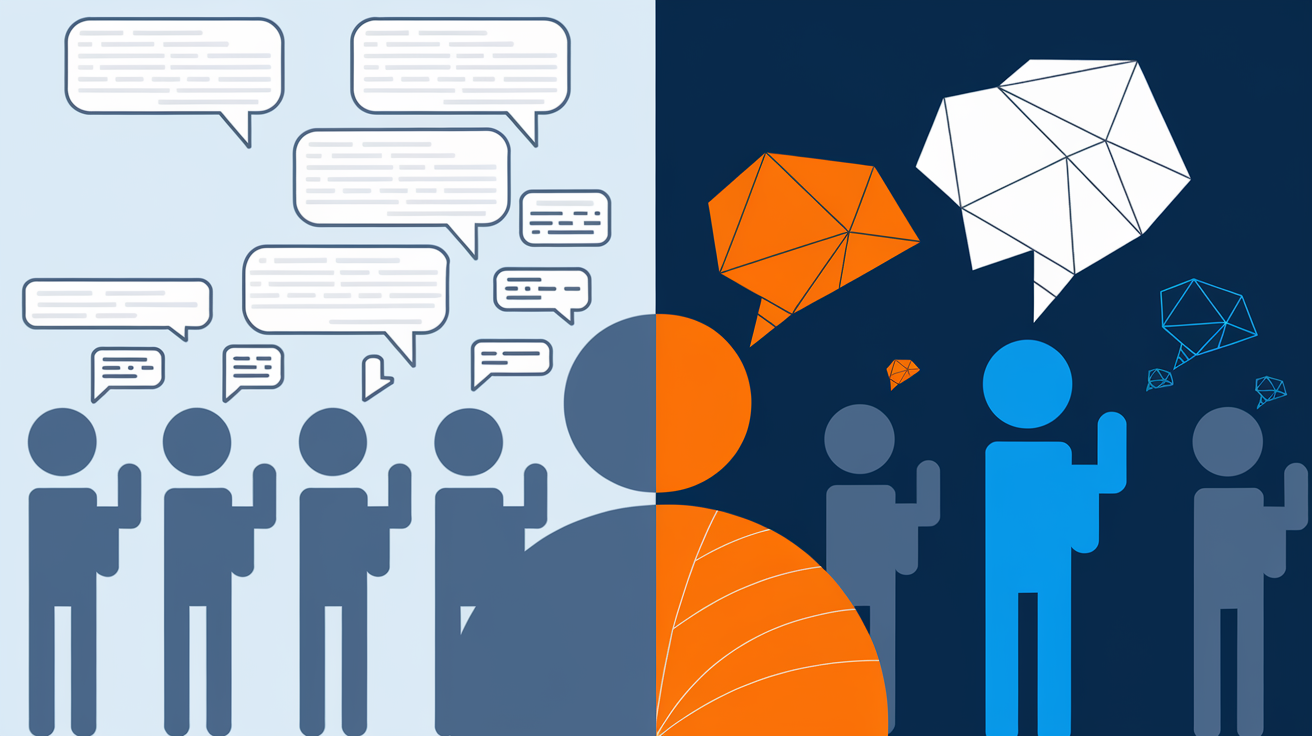
Your competitor just closed three enterprise deals from LinkedIn while you’re still wondering why your “5 tips” posts get ignored. The problem isn’t your reach—it’s that generic LinkedIn content B2B companies default to sounds exactly like everyone else.
The Generic Content Epidemic Killing Your B2B Pipeline
Scroll through LinkedIn for thirty seconds and you’ll see the same recycled content disguised with different logos. “5 lessons from my career journey.” “Monday motivation for sales leaders.” “The secret to B2B success? It’s simpler than you think.” Different faces, identical substance.
This isn’t just annoying—it’s commercially catastrophic. When your content is indistinguishable from the competition, you’ve positioned yourself as a commodity. And commodity vendors compete on price, not value. The CRO evaluating your solution doesn’t need another listicle about “building rapport.” They need evidence you understand their specific constraints around budget allocation, procurement cycles, and stakeholder alignment.
The platform dynamics have shifted against templated content. LinkedIn’s algorithm now prioritises what it calls “knowledge and advice” over engagement bait. Translation: recycled frameworks and motivational platitudes get buried whilst original perspectives get amplified. According to Tamarind’s B2B House, there are 1,200+ posts per minute on LinkedIn with a 48% increase in engaged feed time compared to 2020. The platform is more crowded than ever, which means differentiation isn’t optional—it’s survival.
What’s particularly dangerous is how engagement metrics have decoupled from sales outcomes. You might get 200 likes on a post about “the power of persistence” whilst the article explaining your proprietary methodology gets 40. But which one actually advances deals? I’ve watched sales leaders celebrate vanity metrics whilst their pipeline stays empty because they’re attracting the wrong audience with the wrong message.
What Makes Generic LinkedIn Content B2B Companies Should Avoid
Generic content has four distinct characteristics, and spotting them in your own output is the first step to fixing the problem. First: vague advice that applies to everyone, which means it helps no one. “Focus on customer success” isn’t a strategy—it’s a platitude. Second: borrowed frameworks presented as insight. If you’re explaining BANT or the Gartner Magic Quadrant without adding your own perspective on why it’s flawed or how you’ve adapted it, you’re a curator, not a thought leader.
Third: no point of view. The safest position is no position, which is why most B2B content reads like it was written by committee. “Both approaches have merit” is the calling card of someone afraid to alienate anyone, which paradoxically makes you forgettable to everyone. Fourth: opinions designed not to offend. When you’re terrified of pushback, you write content that says nothing substantive.

ChatGPT has made this worse. The same AI generating your “10 tips for better prospecting” is generating the identical list for everyone else. Decision-makers spot this instantly. They’ve seen the same structure, the same phrasing, the same empty calories dressed up as insight. When a CFO reads content that could have been written by any of your five competitors, they’ve learned nothing about why you’re different.
There’s a meaningful difference between “relatable” and “forgettable” in B2B contexts. Relatable means you understand their world—the politics of getting budget approved, the tension between innovation and risk aversion, the reality that their career progression depends on vendor choices. Forgettable means you’ve regurgitated generic business truisms that demonstrate surface-level understanding at best.
Your ideal customer profile can smell recycled content because they’re drowning in it. When they see another “thought leadership” post about resilience or another carousel about email subject lines, they keep scrolling. You’ve trained them that your content doesn’t warrant their attention. That’s not an algorithm problem—that’s a quality problem.
Why Generic LinkedIn Content B2B Fails in Enterprise Sales Cycles
Enterprise buyers don’t make decisions based on a single interaction. They’re evaluating you across touchpoints over months, sometimes years. Your LinkedIn content isn’t competing against other LinkedIn posts—it’s competing against vendor websites, analyst reports, peer recommendations, and your competitors’ thought leadership. When your content is generic, you’ve failed one of those evaluations.
Consider the typical 6-18 month consideration period for enterprise software. During that window, procurement teams are building a mental model of each vendor. Are you innovative or iterative? Do you understand our industry’s nuances or are you applying generic best practices? Can you hold your own in a boardroom discussion or are you reciting talking points? Your content answers these questions whether you intend it to or not.
I’ve spoken with procurement teams who explicitly use LinkedIn to disqualify vendors. They’re not looking for reasons to say yes—they’re looking for reasons to say no. Generic content is a red flag that signals: “This company doesn’t have proprietary methodology. They’ll implement the same playbook they’ve run everywhere else. They don’t understand what makes us different.” One procurement director told me they eliminated a vendor from consideration after reviewing the founder’s LinkedIn posts, which demonstrated no original thinking about their specific market challenges.
The lead quality problem is equally damaging. Generic content attracts generic leads. When you post “5 ways to improve conversion rates,” you attract people interested in quick wins, not strategic partnerships. You get tyre-kickers browsing for tips, not budget holders evaluating vendors. These leads clog your pipeline, waste your BDRs’ time, and distort your metrics about what’s actually working.
The algorithmic consequences compound over time. LinkedIn’s system learns who engages with your content and shows future posts to similar profiles. If your generic content attracts junior marketers looking for career advice, the algorithm decides that’s your audience. When you finally publish something substantive aimed at VPs, it doesn’t reach them because you’ve trained the platform to categorise you incorrectly. You’re trapped in an audience you didn’t choose because your content didn’t signal who you actually serve.
The Real Cost of Playing It Safe With Cookie-Cutter Posts
The most expensive cost of generic content is the opportunity you never see. A potential customer was evaluating vendors, came across your LinkedIn profile, scrolled through three posts that said nothing distinctive, and moved on. You’ll never know their name. They’ll never appear in your CRM. But they’ve made a decision about you, and it’s final.
Your generic content actively strengthens your competitors’ position. When buyers compare options, differentiation is relative. If your competitor is publishing original research about emerging buying committee structures whilst you’re posting motivational quotes, you’ve handed them the “thought leader” position by default. You’re making them look better through your mediocrity.
The spiral effect is real and brutal. Generic content gets low engagement because it doesn’t stand out. Low engagement signals to LinkedIn that your content isn’t valuable, so reach decreases. Decreased reach creates panic, leading to more desperate tactics—more frequent posting, more engagement bait, more of what isn’t working. Each iteration makes the problem worse because you’re optimising for the wrong metric.
Consider the executive time investment. Your CRO spends two hours per week creating LinkedIn content. That’s 100 hours per year. If that content generates zero pipeline influence because it’s indistinguishable from competitors, you’ve wasted 100 hours of your most expensive resource. The opportunity cost isn’t just the content—it’s what else that executive could have done with that time.
Brand perception damage is harder to quantify but equally destructive. When your content positions you as a follower rather than innovator, that perception infects every other interaction. Sales calls become harder because you’re not perceived as premium. Pricing conversations get more challenging because you haven’t established expertise. Talent acquisition suffers because ambitious people want to work for companies perceived as leaders, not laggards.
What Actually Works: Moving Beyond Generic LinkedIn Content B2B
Proprietary methodology is your most powerful differentiator on LinkedIn. Instead of explaining general principles everyone knows, document your specific process. How do you qualify enterprise deals differently than conventional BANT? What’s your framework for navigating buying committees that conventional wisdom misses? When you share the intellectual property that makes you effective, you demonstrate expertise competitors can’t fake.
Taking defensible positions on controversial topics separates genuine thought leaders from content creators. “Account-based marketing is dead for 80% of B2B companies” is a position. “ABM is important” is not. The willingness to stake a claim and defend it with evidence signals confidence and independent thinking. Some people will disagree—that’s the point. You’re not trying to appeal to everyone; you’re trying to demonstrate clear thinking to people whose problems you can solve.
Specific client stories with concrete numbers transform case studies from marketing fluff into credible evidence. “We helped a client” is generic. “We helped a Series B SaaS company reduce their sales cycle from 120 to 73 days by restructuring their champion identification process in the second meeting” is specific. The details make it credible. They also make it relevant to prospects with similar challenges whilst simultaneously demonstrating you’ve solved this problem before.
Your actual sales conversations are content goldmines. Every objection you handle, every buying committee dynamic you navigate, every procurement process you’ve learned to manage—these are insights your prospects need. When you’re explaining to a prospect why their current approach to vendor evaluation is flawed, you’re teaching. Turn that teaching into content. This approach ensures relevance because you’re addressing real obstacles buyers face, not hypothetical challenges from a content calendar brainstorm.
Research-backed content establishes credibility that opinion alone cannot. According to Edelman’s research on B2B thought leadership, the highest quality content includes strong research and data (cited by 55% of buyers), helps them better understand their own business challenges and opportunities (44%), and offers concrete guidance and case studies (43%). Buyers explicitly state that prominent, well-known experts produce above-average content (62%), and unique formats that look different than other content they typically see matter (66%).
Creative storytelling differentiates in crowded markets. LinkedIn’s benchmark report shows that 88% of CMOs are pushing for more innovative campaigns. This shift is about content marketing that resonates and fosters genuine connections—moving beyond typical job ads to showcase what truly differentiates your firm. Focus on narratives that highlight the impact you’ve had on clients, using real-world success stories and formats that break patterns.
How to Audit Your LinkedIn Content for Generic-ness
The ten-second test is ruthlessly effective. Take your last five posts, remove your name and company logo, and ask: could this have been written by any of my competitors? If the answer is yes, you’ve failed. Distinctive content has fingerprints—specific examples, particular perspectives, unique frameworks that identify the author even without attribution.
Scan for lazy phrases that signal generic thinking. “Game-changer” appears in content that describes nothing game-changing. “Thought leader” is claimed by people who haven’t demonstrated thought leadership. “Unlock potential” is what you say when you can’t articulate specific outcomes. These phrases are red flags that you’re writing on autopilot, reaching for corporate clichés instead of precise language that conveys actual meaning.
The competition test provides immediate clarity. Open LinkedIn in another tab, find your top three competitors, and compare content. If they could post your exact words without anyone noticing, you’re not differentiated. This isn’t about being different for difference’s sake—it’s about having a perspective shaped by your unique experience that naturally diverges from others’ viewpoints.
Measuring specificity reveals whether you’re making genuine claims or hiding behind generalities. Count the numbers in your content. How many specific data points? How many named frameworks or methodologies? How many nuanced takes that acknowledge complexity rather than oversimplifying? Vague content uses abstract language that sounds meaningful but commits to nothing. Specific content makes falsifiable claims backed by evidence.
The buyer value test is the ultimate measure. Would a VP share your post internally with their team or forward it to a peer at another company? If not, you’ve created content that consumes time without delivering value. Decision-makers share content that makes them look smart, helps them do their job better, or arms them with arguments they need to make internally. If your post doesn’t accomplish one of those objectives, it’s not good enough.
Transitioning From Generic to Genuinely Differentiated
Start with a content inventory. Categorise everything you’ve published in the past six months into three buckets: proprietary insight (things only you could say), adapted insight (common ideas with your spin), and generic (could have been written by anyone). Most people discover 70% or more falls into the generic category. That’s not a failure—it’s a baseline. You can’t improve what you don’t measure.
Identify your unique insight areas by asking: where do we have proprietary knowledge competitors don’t? This might be a particular market segment you’ve served for years, a methodology you’ve developed and refined, or patterns you’ve observed across dozens of implementations. Your competitive advantage in delivery should inform your competitive advantage in content. If you’re genuinely better at something, you should be able to explain why in ways competitors can’t replicate.
The commercial impact of thought leadership is measurable. According to a HubSpot analysis, companies with active thought leaders see 2.7 times more qualified leads than competitors without, with those leads demonstrating a 34% higher close rate. This isn’t correlation—it’s causation. Buyers trust experts, and trust accelerates decision-making whilst increasing deal size. When prospects view you as a trusted expert, they’re willing to invest in premium solutions rather than hunting for the cheapest option.
Building a thought leadership system means creating repeatable processes for capturing and sharing expertise. This isn’t about inspiration—it’s about infrastructure. How do you extract insights from customer conversations? Who documents the methodologies your team has developed? What’s the workflow for turning internal IP into external content assets? Without systems, thought leadership depends on sporadic motivation, which means it doesn’t happen consistently.
Repurposing internal IP is more effective than creating content from scratch. Your sales playbooks, onboarding frameworks, and problem-solving methodologies are content in disguise. The qualification framework you use internally becomes a LinkedIn post about how to evaluate vendors. The objection handling guide your team references becomes content about the real obstacles to adoption. You’re already doing the thinking—you’re just not sharing it externally.
Measure what matters by tracking influence on deal velocity, not just engagement metrics. Which posts get referenced in sales conversations? Which content pieces get forwarded by prospects to their colleagues? How many opportunities specifically mentioned your content as a factor in choosing to engage? These are the metrics that correlate with revenue. Likes and comments from people who will never buy from you are vanity metrics that distract from commercial impact.
The Platform Reality: Why LinkedIn Rewards Originality
LinkedIn has evolved far beyond its job-site origins. With 9 billion content impressions per week that aren’t job-related and 1.6 billion individuals visiting monthly, the platform has become a primary destination for business insights. Members spend an average of 7 minutes and 20 seconds per visit, reviewing approximately 6 pages. This engaged behaviour creates opportunity—but only for content that warrants attention.
The statistics reveal both challenge and opportunity. With 96% of B2B marketers relying on LinkedIn for lead generation, competition for attention is fierce. Yet 60% of users are actively searching for business insights, creating genuine demand for expertise. The gap between supply and demand isn’t about volume—it’s about quality. There’s abundant generic content and scarce original thinking.
AI-personalised content shows meaningful results. According to an Adobe study, there’s a 42% LinkedIn engagement boost when content is genuinely personalised rather than broadly targeted. This doesn’t mean AI-generated generic posts—it means understanding specific audience segments deeply enough to address their particular challenges. The content impressions per post have increased 15 times compared to job postings, signalling that the platform’s algorithm rewards knowledge-sharing over transactional content.
Your content performance on LinkedIn isn’t determined by luck or timing—it’s determined by whether you’re adding signal or noise. The platform has become sophisticated enough to distinguish between recycled frameworks and original methodology, between engagement bait and genuine insight. When you publish content that teaches something new, addresses a problem with specificity, or challenges conventional thinking with evidence, the algorithm amplifies it because that’s what its users value.
Ready to Transform Your LinkedIn Presence From Generic to Revenue-Generating?
Distinctive content isn’t about being clever—it’s about being useful in ways your competitors aren’t. That requires translating your genuine expertise into content that demonstrates rather than claims thought leadership.
Explore how AI GTM Studio can help you build a LinkedIn content system that differentiates your expertise and influences enterprise buying decisions.
Leave a Reply